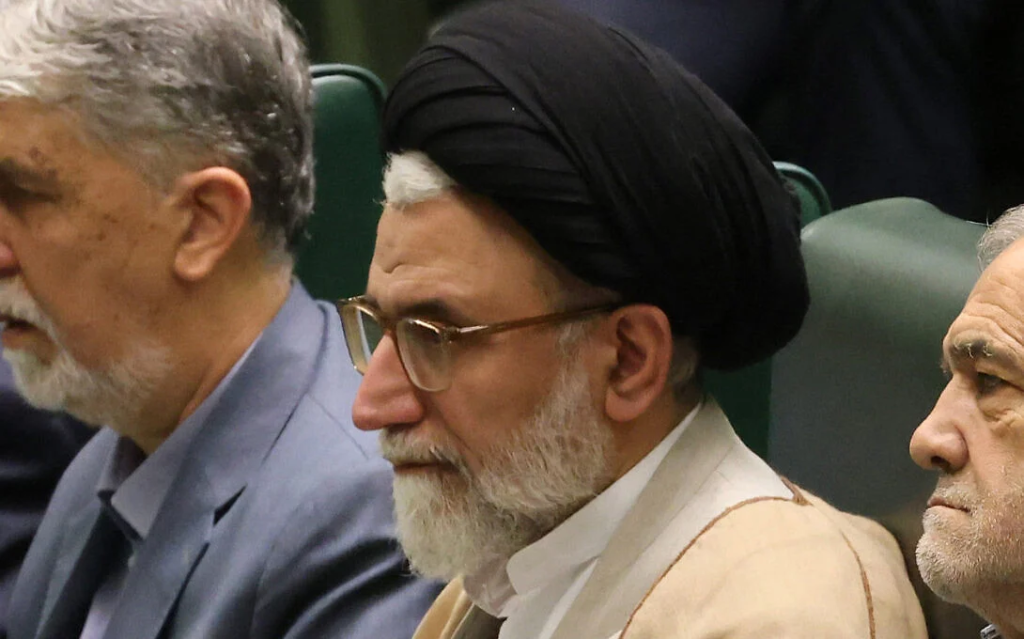
Israel has claimed that it killed Iran’s intelligence minister, Esmaeil Khatib, marking what could be the third high-profile assassination of a senior Iranian figure within just two days. The announcement was made by Israeli Defence Minister Israel Katz, although Iran has not yet confirmed or responded to the claim.
If verified, the killing would follow closely on the deaths of two other prominent Iranian officials — security chief Ali Larijani and Gholamreza Soleimani, head of the Basij paramilitary force — who were reportedly killed in Israeli airstrikes a day earlier. Iran is set to hold funerals for both leaders.
Despite these losses, Iran’s Foreign Minister Abbas Araghchi has downplayed the impact, stating that the country’s leadership structure does not depend on any single individual and will remain intact.
Reports suggest that Khatib was considered a key figure within Iran’s intelligence network and had close ties to the country’s new supreme leadership. According to Israeli sources, recent intelligence operations enabled the targeting of multiple senior officials within a short span.
Israel has also indicated a shift in its military approach. Defence Minister Katz stated that he, along with Prime Minister Benjamin Netanyahu, has granted the military standing authorisation to carry out strikes on high-ranking Iranian officials without requiring case-by-case approvals — signalling a more aggressive and streamlined strategy.
The killings are being viewed as part of a broader Israeli campaign to weaken Iran’s leadership. Targeted assassinations have long been a tactic used by Israel against its adversaries, including leaders from groups such as Hamas, Hezbollah, and others across the region.
Since the escalation of hostilities with Iran began in late February, Israel, along with the United States, has reportedly carried out a series of strikes aimed at dismantling Iran’s top military and political leadership. These operations have significantly altered the regional security landscape and heightened tensions across West Asia.
As the situation continues to evolve, the lack of official confirmation from Tehran regarding the latest claim adds further uncertainty to an already volatile conflict.