Facing a significant squeeze in liquefied petroleum gas (LPG) supplies due to disruptions in West Asia, the Centre has asked States and Union Territories to accelerate approvals for expanding piped natural gas (PNG) networks across the country.
The move comes as the government encourages both households and commercial users to shift to PNG wherever possible, in order to ease pressure on LPG availability. Consumers have also been advised to adopt alternatives such as induction cooktops and ensure efficient use of LPG, even as oil marketing companies (OMCs) continue to maintain regular household supplies.
The supply crunch has been largely triggered by disruptions in maritime traffic through the Strait of Hormuz — a crucial route for India’s energy imports. India relies on imports for about 60% of its LPG requirements, and nearly 90% of those imports pass through this route. As a result, nearly 55% of the country’s LPG consumption has been impacted. While domestic supplies are being prioritised for households, commercial and industrial users are facing acute shortages.
To address the situation, the government has written to States seeking faster clearances for city gas distribution (CGD) projects. Key measures requested include deemed approvals for pending applications, clearance of new proposals within 24 hours, waivers on road restoration and permission charges, relaxed working hours, and the appointment of nodal officers to ensure quicker rollout of infrastructure.
Although natural gas imports have also been affected, the situation remains less severe compared to LPG. India imports around half of its natural gas needs, with 55–60% routed through the Strait of Hormuz. Authorities are therefore pushing consumers in PNG-covered areas to switch, with CGD companies offering incentives such as free gas volumes and waived connection fees.
The Petroleum and Natural Gas Regulatory Board (PNGRB) has also directed CGD firms to intensify outreach and speed up connections. Currently, around 60 lakh households are within reach of PNG networks and can transition quickly. In comparison, India has about 33.3 crore LPG connections, while PNG connections stand at roughly 1.5 crore, highlighting the need for rapid infrastructure expansion.
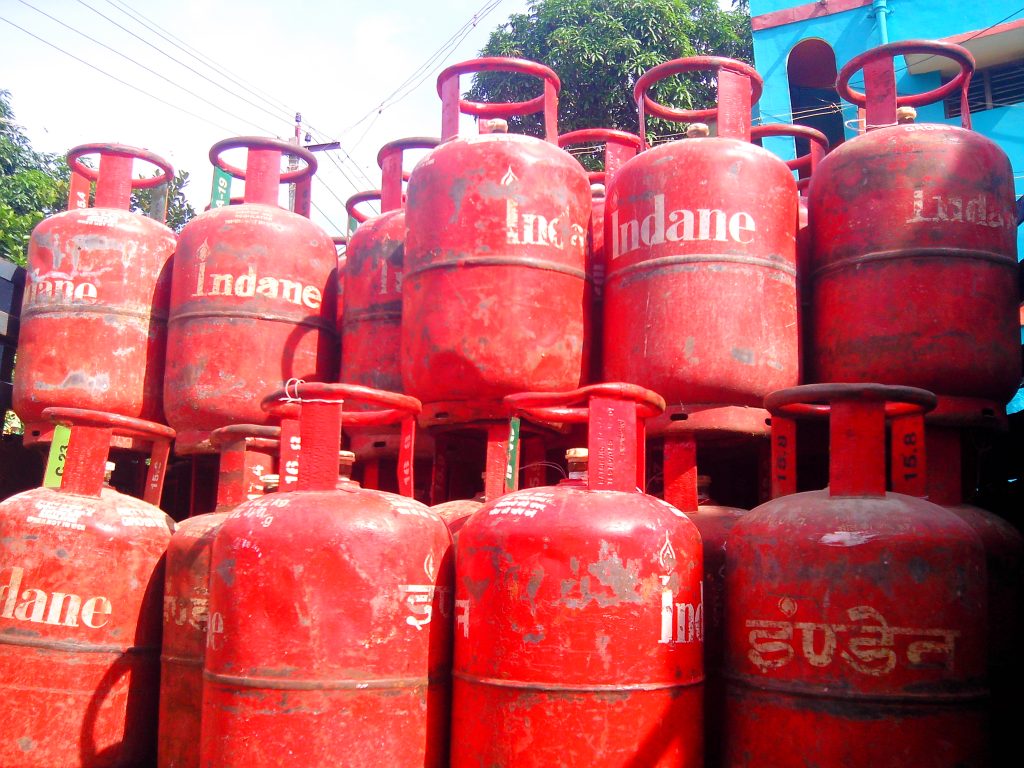
Officials noted a slight easing in panic bookings of LPG cylinders, which fell from 88.8 lakh on March 13 to around 70 lakh on March 16, though still above the usual daily average of 55.7 lakh. OMCs continue to supply around 50 lakh cylinders daily, occasionally exceeding 60 lakh, with no reported shortages at the country’s 2,500 LPG dealerships.
To boost domestic availability, refiners have been instructed to maximise LPG production by diverting propane, butane, and other petrochemical feedstocks. These steps have already increased domestic LPG output by 38% compared to pre-conflict levels, with further gains expected.
Additionally, the government has extended the waiting period between cylinder bookings to 25 days in urban areas and 45 days in rural regions to curb hoarding. Alternative fuels such as kerosene, fuel oil, biomass, and coal are being promoted for commercial users to offset shortages.
Authorities have also intensified action against hoarding and black marketing. Over 12,000 raids have been conducted, leading to the seizure of more than 15,000 cylinders, with major crackdowns reported in Delhi, Goa, Uttar Pradesh, Jammu & Kashmir, Kerala, and Madhya Pradesh. OMCs have carried out over 2,500 surprise inspections to ensure fair distribution and prevent irregularities.
While the LPG situation remains under pressure, the government maintains that supplies are stable and under control for now.