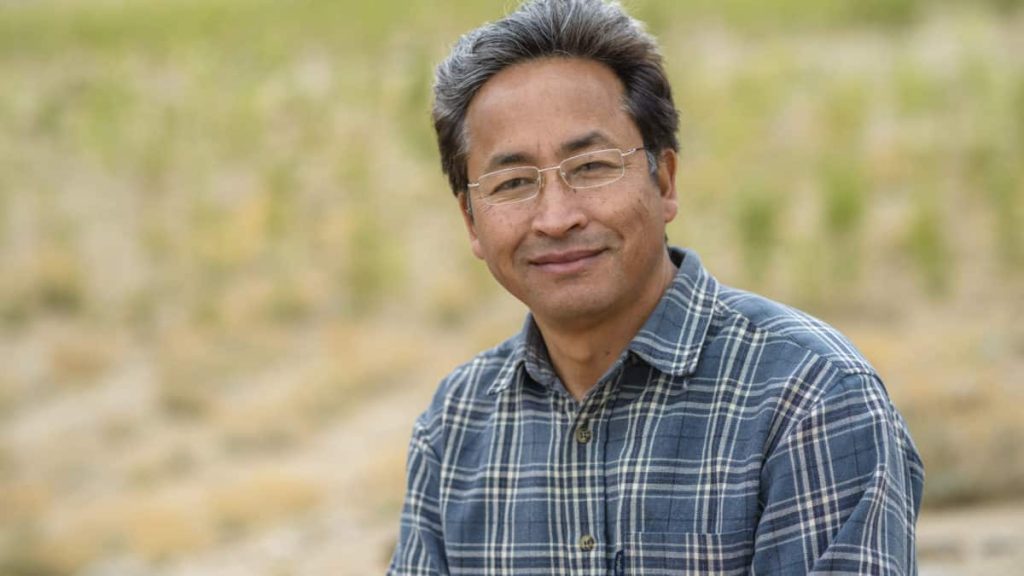
After spending over six months in detention under the National Security Act (NSA), climate activist and education reformer Sonam Wangchuk has struck a conciliatory tone on Ladakh’s long-standing political demands. Following his release, he indicated openness to a flexible, “give-and-take” approach with the Centre, stressing that any resolution should benefit both sides.
Wangchuk, who was detained on September 26 last year after protests in Leh turned violent, was released after the government withdrew the NSA order. Addressing a press conference in Delhi alongside his wife, Geetanjali Angmo, he said Ladakh’s key demands remain Sixth Schedule status and full statehood — but suggested that achieving even one of these could be a meaningful step forward.
“If the Centre wants something, we should also get something. It shouldn’t be a lose-lose situation,” he said, hinting at a more flexible stance compared to regional groups like the Apex Body Leh and the Kargil Democratic Alliance, which have maintained that both demands are non-negotiable.
Welcoming what he described as the government’s “extended hand” for dialogue, Wangchuk said he is focused on a constructive outcome rather than confrontation. “I am greedy for a win-win. What is the use if I win but the cause does not?” he remarked, adding that meaningful talks could benefit both Ladakh and the government.
He also clarified that there was no deal behind his release and reiterated that his movement has always been for the people of Ladakh, not personal gain. Wangchuk expressed readiness to be part of any committee formed to represent Ladakh in discussions with the Centre.
Reflecting on his time in detention, Wangchuk said he had been prepared for a long legal battle but welcomed the opportunity for dialogue. While he described communication challenges during his incarceration, he also acknowledged the humane behaviour of prison staff. His wife alleged that she faced surveillance while pursuing legal action for his release.
Choosing to look ahead rather than dwell on past hardships, Wangchuk emphasised rebuilding trust and starting fresh. “We can now move towards a new beginning where dialogue takes precedence,” he said, adding that he will return to Ladakh to consult with local stakeholders before deciding the next course of action.
He also expressed strong faith in the judiciary and urged the government to withdraw what he termed “unnecessary cases” against Ladakh residents. Highlighting broader concerns, Wangchuk noted that a majority of inmates he encountered were from economically weaker backgrounds, calling it a troubling reality that needs attention.
Reaffirming his commitment to non-violent protest, he said, “I follow Gandhian principles. I don’t prefer hunger strikes, but I won’t rule out peaceful protest if needed.”
Geetanjali Angmo, meanwhile, spoke about a long-term vision for Ladakh — one focused on sustainability, self-reliance, and community empowerment, in collaboration with the government.
Despite past allegations against him, Wangchuk said he holds no bitterness. “I prefer to look forward, not back,” he said, underlining his hope for a peaceful and constructive resolution to Ladakh’s demands.