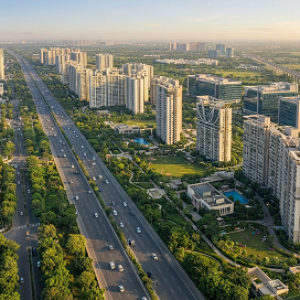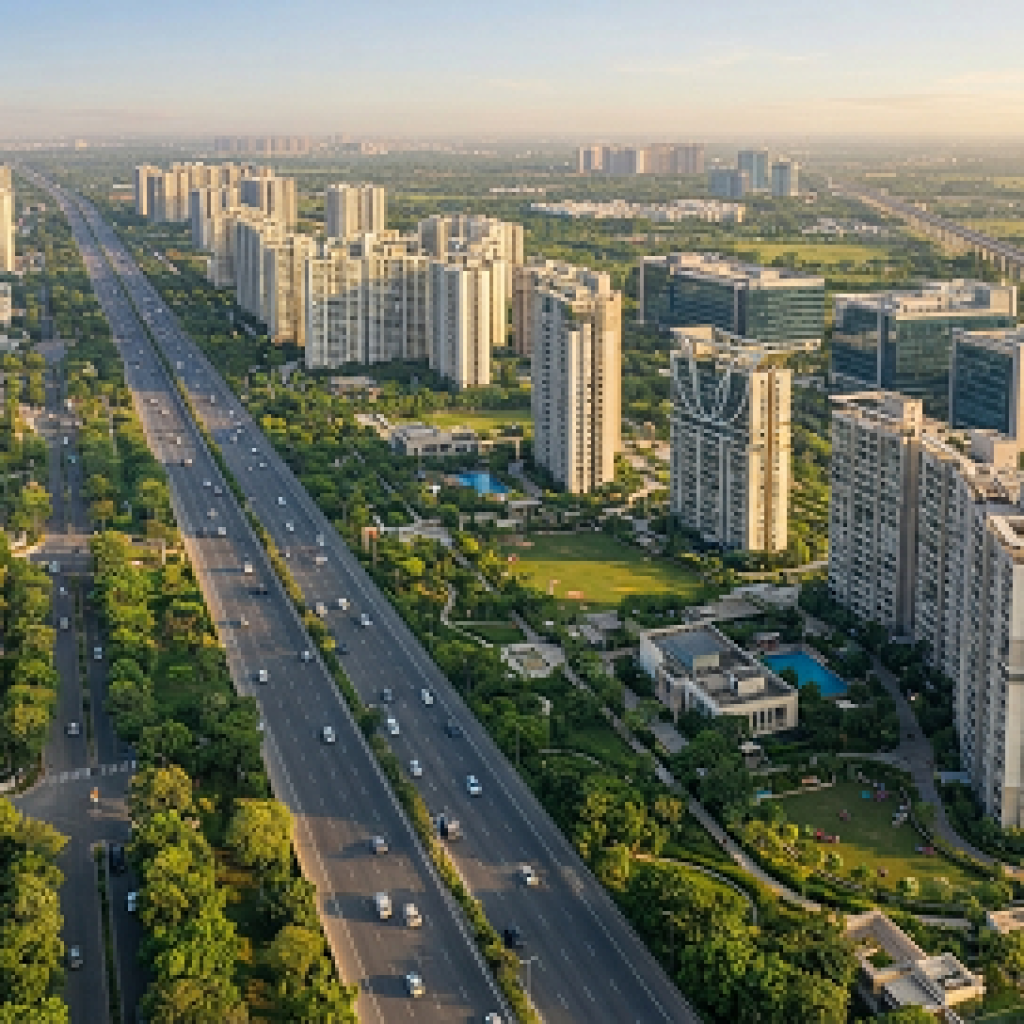
Connectivity built the Noida Expressway, and now liveability will define its next phase of growth. For nearly two decades, the Noida Expressway has been defined by movement. It shortened distances, linked Noida to Delhi and Greater Noida, and turned open land into one of NCR’s most sought-after residential and commercial corridors. Today, that connectivity is stronger than ever. As the corridor enters its next phase, however, a richer question is shaping homebuyer decisions: beyond how quickly a home connects, how well does it let a family live?
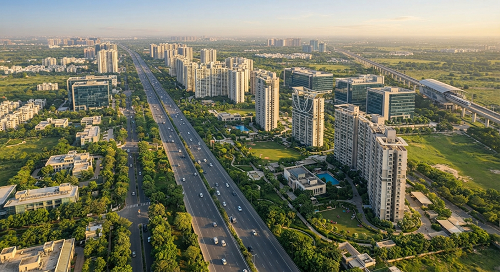 |
Noida Expressway’s growth is increasingly driven by connectivity, green spaces and improved liveability
The infrastructure momentum is impressive. Noida International Airport at Jewar began commercial flights in June, bringing a new aviation gateway within reach of the corridor. The Aqua Line extension from Sector 142 to Botanical Garden, cleared by the Union Cabinet in February, has progressed with the award of a construction contract, promising interchange with Delhi Metro’s Blue and Magenta lines. The proposed Yamuna Pushta corridor could add another route into Delhi. Investor confidence has followed. ANAROCK data shows NCR recorded the sharpest annual residential price growth among India’s top seven cities in the July to September quarter, at 12 percent.
What is evolving is the buyer. Today’s homebuyer increasingly looks at a home as a long-term lifestyle choice. Ask buyers in NCR what they want, and the answer usually begins with space. ANAROCK’s Consumer Sentiment Survey for H1 2026 supports this. Of the buyers it spoke to, 53 percent preferred a three-bedroom home. Then come the everyday essentials: a good school down the road, a hospital within easy reach, shops and cafés nearby, and enough open green for children to run around and for adults to unwind after a long day.
The Expressway is well placed to deliver on these expectations. Established schools, healthcare institutions and retail destinations have taken root across its sectors, and the social fabric continues to deepen with every new community. Developers, too, have begun planning around this idea of complete living. Prateek Canary in Sector 150, with 664 homes spread across 12.55 acres and most of the site kept open, reflects how low-density planning and abundant greenery have become central to how the corridor’s newer communities are imagined.
Workplace proximity adds another layer of appeal. Over the years, the Expressway has grown into one of Noida’s busiest office addresses, home to technology companies and a growing number of global capability centres. Their presence supports employment generation and draws a young, well-earning professional base. For many residents, a short commute translates into more time with family, and that is perhaps the most valuable amenity of all. This concentration of workplaces also strengthens the case for sustained end-user housing demand.
Nowhere does this blend of connectivity and liveability come together more clearly than at the southern end of the corridor, around Sectors 150 to 152. ANAROCK’s Q3 2026 figures point the same way. Luxury now makes up most of what is being built, with high-end and ultra-luxury homes accounting for 52 percent of NCR’s new launches that quarter. That’s true across the region, of course. But the southern stretch of the Expressway has something many other pockets don’t. Homes here come with room to breathe, plenty of greenery and a little more privacy and quiet, and the offices and big infrastructure projects are still close by.
That growing appetite for well-planned luxury living is setting the stage for the corridor’s next chapter. Developers with a long association with the belt are preparing fresh offerings, among them Prateek Group, whose next address on the Expressway is quietly taking shape. As connectivity improves and the surrounding social infrastructure matures, such developments could attract buyers seeking a balance between accessibility and everyday comfort.
In the years ahead, the corridor’s real value will rest less on the next infrastructure headline and more on how well its neighbourhoods work for the people who live in them. Established employment centres, dependable social infrastructure and thoughtfully planned developments can support end-user demand and long-term value. Infrastructure will continue to bring people to the Expressway, employment will keep them here, and liveability will shape where they choose to settle.