
-
India’s smart protein sector attracted INR229 crore (USD24.5 million) investment between 2023 and 2025, with fermentation-derived proteins leading in 2023 and 2024, plant-based funding rebounding and cultivated meat recording larger-scale investments in 2025.
-
Smart proteins gained national policy recognition under the BioE3 policy in 2024, with dedicated grant calls and high-performance biomanufacturing platforms.
-
The Indian market boasts 488 smart protein products and 93 companies, with active SKUs growing 34 percent since 2023, and products increasingly tailored to Indian consumer preferences amidst growing demand for protein.
The Good Food Institute India (GFI India), the leading expert on the smart protein sector, unveiled the second edition of its flagship State of the Industry Report at the State of Smart Protein 2026 convening held at Sabha, Bengaluru. The only report of its kind in India, it provides a comprehensive assessment of key developments across plant-based, fermentation-derived, and cultivated meat, seafood, eggs, and dairy from 2023 to 2025. The report was launched before innovators, industry leaders, investors, and ecosystem partners.
 |
The Good Food Institute India (GFI India) unveiled its second State of the Industry Report at the State of Smart Protein 2026 convening in Bengaluru
Three years since its inaugural edition, the State of the Industry Report 2026 captures an important shift in India’s protein landscape. Despite a global investment slowdown, the smart protein sector has strengthened its foundations with growing public support, moving beyond early product launches towards delivering better value for consumers, building technological readiness, and propelling India to be a manufacturing and ingredient hub for the world. These developments reflect smart protein’s growing relevance to India’s priorities around nutrition security, agricultural value-addition, sustainability, and resilient supply chains.
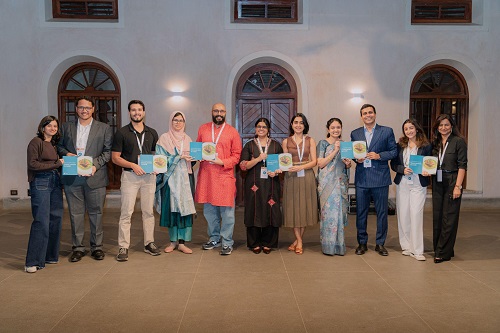 |
GFI India leaders, speakers, and ecosystem partners celebrate the launch of the State of the Industry Report 2026 at the State of Smart Protein convening in Bengaluru
Commercial activity spread beyond retail shelves, with new opportunities emerging in business-to-business, food service, and co-manufacturing channels. India’s growing appetite for protein-rich foods has also opened up adjacent markets, as the high-protein segment garnered more than 24 funding rounds worth INR440 crore in 2025. Domestic manufacturers are now working with indigenous pulses, millets, and oilseeds to develop locally sourced protein ingredients and reduce import dependence.
Sneha Singh, Managing Director, GFI India, said, “The second edition of our State of the Industry report truly takes stock of where the smart protein sector is and how far we have come. The imperative remains: emissions, water stress, and land degradation from accelerating conventional protein production, alongside public health risks and rising costs, continue to threaten access to nutritious protein. As India confronts these interconnected challenges on its path to a Viksit Bharat, the report underscores that smart proteins can diversify the country’s protein supply in ways that satisfy consumers. Coordinated action by manufacturers, investors, researchers, and government will be critical to realise the sector’s potential, and our report brings together updated India-specific data to guide their decision-making.”
While private capital has become more selective, public funding and alternate financing models are playing a larger role in addressing the sector’s capital needs for large-scale infrastructure and manufacturing. This shift was accelerated by the Government of India’s BioE3 policy identifying smart proteins as a biotechnology priority, state-level support being advanced by Karnataka, Maharashtra, and Tamil Nadu, and encouraging signals for regulation and taxation. At the same time, industry-academia partnerships are helping translate research into commercial applications through technical expertise and pilot-scale facilities.
Despite steady progress, India still imports approximately 90 percent of plant protein isolates and USD650 million of processing equipment. As the report highlights, expanding domestic ingredient and equipment production and shared manufacturing infrastructure remain critical priorities for achieving taste and price parity with conventional animal proteins.
The launch also spotlighted findings from two recent GFI India studies, which add new evidence on consumer acceptance and India’s manufacturing readiness. India’s Smart Protein Taste Test, a blind sensory analysis of plant-based meat and eggs, conducted with NECTAR and India Animal Fund, finds that 60 percent of consumers liked the products tested, while 85 percent expressed purchase intent. Mapping India’s biomanufacturing potential for smart proteins, a study with Sathguru Management Consultants, identifies 774,170 kilolitres of fermentation capacity across nine adjacent industries, which could allow companies to leverage existing infrastructure to produce fermentation-derived proteins and diversify their revenue streams. Diverting 26 percent of relevant idle capacity to yeast protein could cover the global market’s estimated 2025 value of USD347 million.
Delivering the keynote address, Chief Guest Dr. Murali Panchapagesa Muthuswamy, President Emeritus, Council of Presidents at the Association of Biotechnology Led Enterprises (ABLE), said, “When I was in the U.S., I witnessed the launch of the first plant-based burgers designed to cook and perform like real meat. I thought this was going to be the engine that would drive the space. Then we started understanding the challenges. The smart protein sector has since made significant progress in becoming a serious biomanufacturing and ingredient-innovation opportunity. With the BioE3 policy unlocking over INR2,000 crore in investments and aligning central and state support for critical infrastructure, the ecosystem has a stronger foundation than ever before. The priority now is producing high-quality proteins economically in India at a price point consumers can afford. I commend the GFI India team for their rigorous research and ecosystem-building efforts—including critical insights into our existing fermentation capacity—to help turn this potential into commercial reality.”
The event also showcased five emerging smart protein startups, featuring innovative uses of underutilised crops and agricultural sidestreams, precision fermentation for animal-free dairy proteins, and enabling technologies for cultivated meat.
State of Smart Protein 2026 brings the sector together at a defining moment. Together, the report and accompanying research offer a nuanced picture of its progress and transformative potential—and which efforts could make the greatest difference in tackling the remaining roadblocks to producing affordable, nutritious, and sustainable proteins at scale.
About Good Food Institute India (GFI India)
The Good Food Institute India (GFI India) is the leading expert on India’s emerging smart protein sector—the ecosystem of plant-based, cultivated, and fermentation-derived meat, eggs, and dairy. As a technical partner within a network of organisations across the U.S., Brazil, Europe, Israel, Japan, and APAC, GFI India works at the intersection of science, business, and public sector engagement to accelerate the R&D, technical know-how transfer, industrialisation, and commercialisation of smart proteins in India. Drawing on India’s unique strengths—including indigenous crops, a strong agrarian economy, low-cost technologies and infrastructure, an abundant talent pool, and biomanufacturing prowess—GFI India provides strategic market intelligence, ecosystem development support, and sector-focused advisory to help advance smart protein innovation and market readiness.